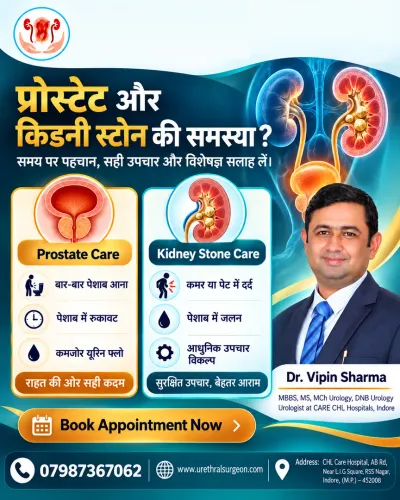

Urologist in Ujjain - Dr. Vipin Sharma
Are you experiencing frequent urination, a burning sensation while urinating, pain from kidney stones, difficulty in passing urine, or other issues related to urinary health? These symptoms may indicate an underlying problem involving the kidneys, bladder, prostate, or urinary tract. Timely examination by a qualified urologist helps identify the root cause and ensures that the appropriate treatment can begin.
If you are looking for a urologist in Ujjain, you can book an appointment with Dr. Vipin Sharma. He is a highly qualified urologist specializing in general and reconstructive urology. His professional credentials include an MS in General Surgery, an MCh in Urology, a DrNB in Urology, and a fellowship in Reconstructive Urology.
Dr. Vipin Sharma serves as a Consultant Urologist at CARE CHL Hospitals in Indore. Patients from Ujjain can contact the hospital for consultations, appointments, and treatment arrangements.
What is a urologist?
A urologist is a medical specialist who diagnoses and treats conditions affecting the urinary system (in both men and women) and the male reproductive system. The urinary system includes the following organs:
* Kidneys
* Ureters
* Bladder
* Urethra
Urologists treat conditions such as kidney stones, bladder stones, an enlarged prostate, urinary tract infections (UTIs), urinary tract obstructions, urethral strictures (narrowing of the urethra), urinary incontinence (loss of bladder control), and certain types of urological cancers. Depending on the patient's condition and health status, a urologist may recommend medications, lifestyle changes, diagnostic tests, endoscopic procedures, or surgery.
Dr. Vipin Sharma – Urological Conditions Treated
Dr. Vipin Sharma’s professional profile highlights his experience and clinical interests across various areas of urology.
1. Treatment of Kidney Stones
Kidney stones are hard deposits that form when minerals and salts present in the urine crystallize. They can cause severe pain in the back, flank, or lower abdomen, blood in the urine, nausea, vomiting, and difficulty urinating.
Treatment depends on the size and location of the stones. Options may include observation, medications, shock-wave treatment, ureteroscopy, RIRS, or PCNL.
2. Benign Prostatic Hypertrophy (BPH)
Benign Prostatic Hyperplasia (BPH) is a non-cancerous enlargement of the prostate gland. It can obstruct the flow of urine and lead to the following symptoms:
* Frequent urination
* Difficulty starting urination
* A weak urinary stream
* Frequent urination at night
* A feeling that the bladder has not emptied completely
* Difficulty urinating or an urgent, sudden need to urinate
Treatment depends on the severity of symptoms, the size of the prostate, the functioning of the urinary system, and the individual's overall health.
3. Management of Urethral Stricture (Narrowing of the Urethra)
A urethral stricture refers to the narrowing of the urethra—the tube that carries urine out of the body. This can occur due to injury, infection, inflammation, or as a result of a previous medical procedure.
Common symptoms include a weak urinary stream, the need to strain, difficulty initiating urination, an inability to empty the bladder completely, and recurrent urinary tract infections. Depending on the location and severity of the narrowing (stricture), treatment may involve endoscopic procedures or reconstructive surgery (urethroplasty).
4. Management of Bladder Stones
Bladder stones are hard deposits formed from minerals within the bladder. They can cause pain in the lower abdomen, pain during urination, blood in the urine, and obstruction of the urinary flow.
Before determining the appropriate treatment, a doctor may investigate the underlying causes, such as the inability to empty the bladder fully or an enlarged prostate gland.
5. Treatment for Urinary Incontinence
Urinary incontinence refers to the involuntary leakage of urine. It can affect both men and women and may be caused by bladder issues, a weakened pelvic floor, neurological problems, or other medical conditions.
Treatment depends on the type of incontinence and may include lifestyle modifications, pelvic floor exercises, medications, or specific medical procedures.
6. Treatment for Hypospadias
Hypospadias is a congenital condition (present at birth) in which the opening of the urethra is located at the base of the penis rather than at the tip (head).
This condition is typically diagnosed by a urologist. Depending on the severity of the condition and the individual's needs, treatment may involve surgery.
7. Treatment for Erectile Dysfunction
Erectile dysfunction refers to the inability to achieve or maintain an erection sufficient for sexual activity. It can be caused by factors such as diabetes, cardiovascular issues, hormonal changes, medications, stress, or other underlying causes.
A urologist can identify the root cause and discuss potential treatment options or procedures.
8. Reconstructive Urology for Men and Women Reconstructive Urology – This field focuses on restoring the structure and function of parts of the urinary system that have been damaged, have shrunk, are congenitally abnormal, or have been altered due to a previous surgery.
Dr. Vipin Sharma’s professional profile includes expertise in reconstructive urology, as well as the management of urethral conditions and issues related to urinary leakage.
9. Cancers of the Urinary Tract
Certain types of cancer can affect the urinary system, including the kidneys, bladder, prostate, and other urological organs.
If you notice blood in your urine or experience persistent changes in your urinary habits, please consult a doctor.
Keywords