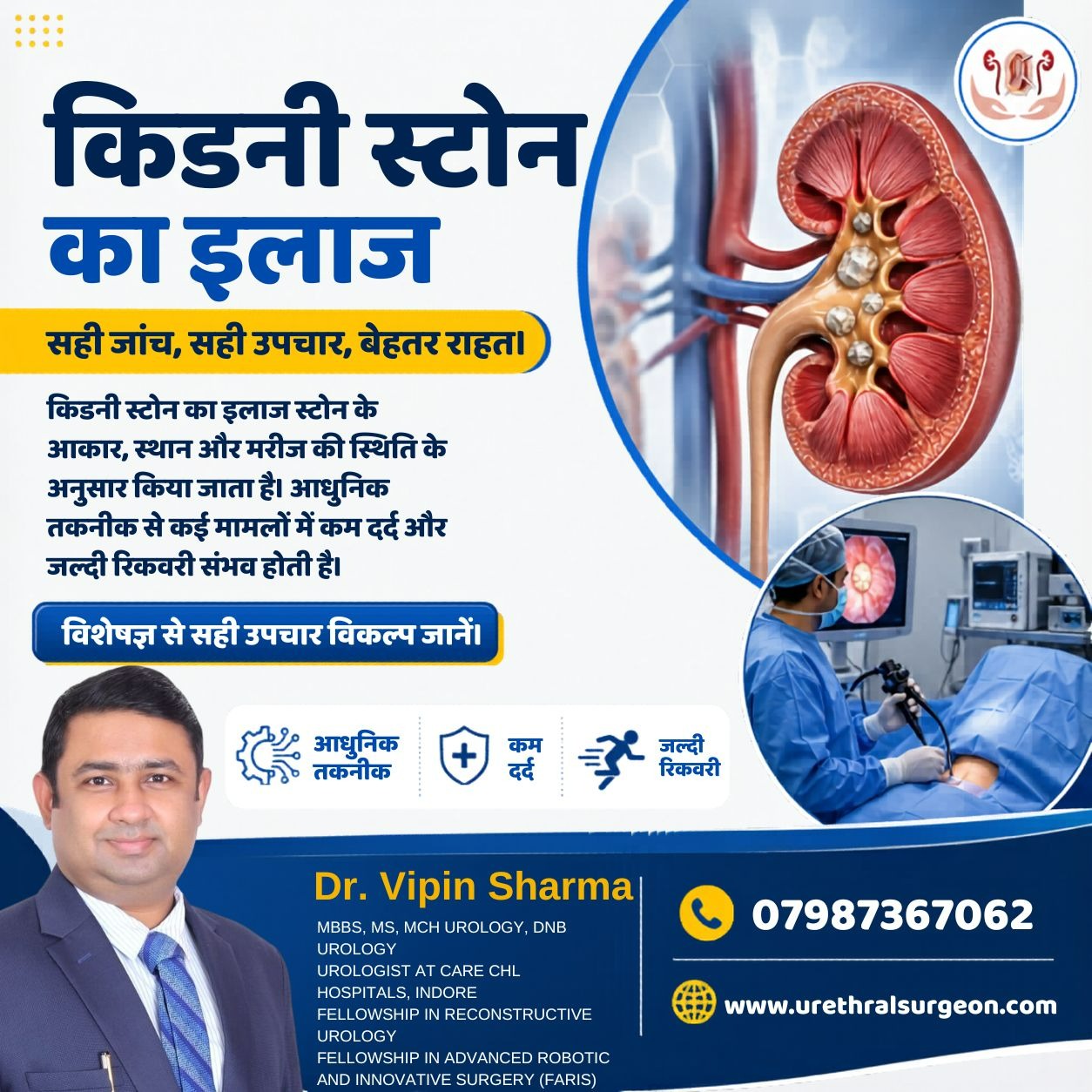
Kidney Stone Specialist Doctor for Patients in Ujjain – Dr. Vipin Sharma
Are you experiencing severe back pain, lower abdominal pain, difficulty urinating, or blood in your urine? These symptoms may indicate kidney stones or other urinary tract conditions that require medical evaluation. Finding an experienced kidney stone specialist doctor in Ujjain can help you understand the cause of your symptoms and determine the right treatment options.
Dr. Vipin Sharma, a qualified urologist with MBBS, MS, MCh (Urology), and DrNB Urology qualifications listed on his professional website, provides urological consultation and treatment for kidney stones and other urinary tract conditions. His clinical practice is located at CARE CHL Hospital, Indore. Patients traveling from Ujjain should contact the hospital or clinic to confirm consultation availability and arrange an appointment before traveling.
What are kidney stones?
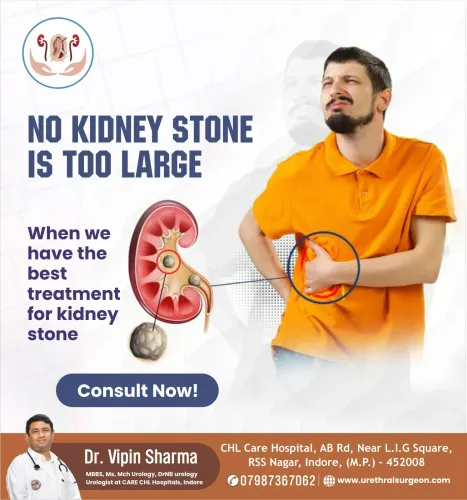
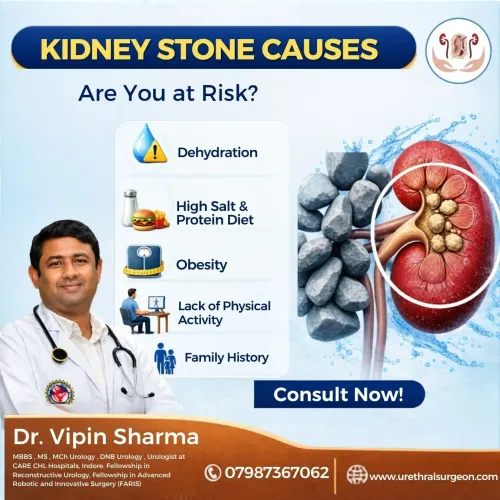
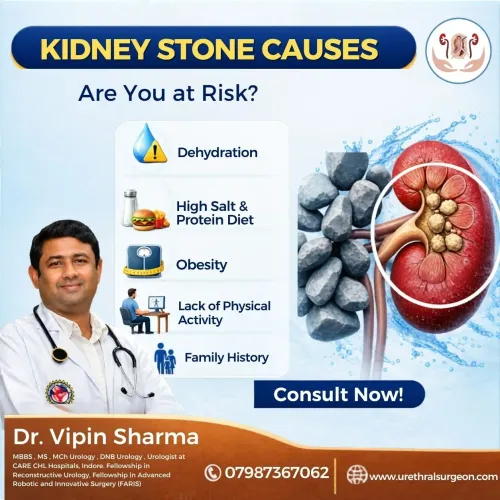
Kidney stones are hard deposits that form when minerals and salts in the urine accumulate and crystallize. They can form in one or both kidneys and vary in size. Some small stones pass through the urinary tract on their own, while larger stones can cause severe pain, bleeding, or obstruction of urine flow. Kidney stones can be caused by poor water intake, concentrated urine, dietary habits, family history, certain metabolic conditions, and other medical conditions. The appropriate treatment depends on the stone's size, location, composition, symptoms, and impact on kidney function.
Common Symptoms of Kidney Stones
Early recognition of symptoms can help patients seek timely medical attention. Common symptoms include:
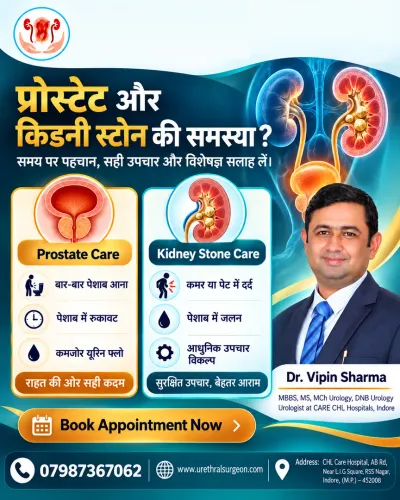
* Sharp pain in the back, side, or below the ribs
* Pain radiating to the lower abdomen or groin
* Sharp pain that comes and goes in waves
* Burning or discomfort when urinating
* Frequent urge to urinate
* Blood in the urine, which may appear pink, red, or brown
* Cloudy or foul-smelling urine
* Nausea or vomiting
* Difficulty urinating
Some kidney stones may not initially cause any significant symptoms. If you experience severe pain, blood in the urine, or difficulty urinating, consult a healthcare professional immediately.
When should you consult a kidney stone specialist?
If you experience recurring kidney stone pain, a stone is detected on an ultrasound or CT scan, blood in your urine, or difficulty urinating, you should consult a urologist.
If you suspect kidney stones, along with fever or chills, difficulty urinating, persistent vomiting, severe pain, difficulty controlling urine output, or signs of dehydration, seek immediate medical attention. Stones associated with infection or urinary obstruction may require emergency treatment.
Kidney Stone Diagnosis and Evaluation
An accurate diagnosis helps determine whether the stone can pass naturally or requires a medical procedure. Based on your symptoms and medical history, a urologist may recommend:
1. Medical History and Physical Examination
The doctor will assess your pain pattern, previous kidney stone episodes, urinary symptoms, existing medical conditions, medications, and family history.
2. Urine Test
A urine test can help detect blood, infection, or other abnormalities. In some cases, further urine tests may be recommended.
3. Blood Tests
Blood tests may be recommended to assess kidney function and check for important metabolic factors. 4. Ultrasound Tests
Ultrasound can help identify signs of kidney stones, urinary tract inflammation, and obstruction.
5. CT Scan or Other Imaging
When more information is needed about the stone's size, location, or obstruction, a CT scan may be recommended. The choice of imaging depends on the patient's condition and clinical assessment.
Kidney Stone Treatment Options
No single treatment is right for every kidney stone. Treatment is chosen based on the stone's size, location, symptoms, risk of infection, and kidney function.
1. Medical Management
Some small stones may pass on their own under medical supervision. Doctors may recommend pain relief, fluid guidance, and medication, if medically appropriate. Medications should not be taken without professional advice.
2. Medical Expulsive Therapy
In patients with certain ureteral stones, doctors may prescribe medication to facilitate the stone's passage. This approach is not suitable for every patient, especially in cases of infection, severe obstruction, or impaired kidney function.
3. Ureteroscopy (URS) and Laser Stone Treatment
Ureteroscopy is a procedure in which a thin instrument is inserted through the urinary tract to reach the stone in the ureter or kidney. A laser may be used to break the stone into smaller pieces so it can be removed or flushed out.
The effectiveness of this procedure depends on the location, size, and clinical condition of the stone. 4. Retrograde Intrarenal Surgery (RIRS)
RIRS involves using a flexible scope passed through the urinary tract to reach the selected stone inside the kidney. Laser energy may be used to break the stone into smaller pieces. After reviewing imaging and other clinical findings, the urologist determines whether this technique is appropriate.
5. Percutaneous Nephrolithotomy (PCNL)
PCNL is a surgical procedure typically used for large or complex kidney stones. It involves accessing the kidney through a small incision in the back to remove or break the stone into smaller pieces. It is performed under anesthesia in the hospital.
6. Shock Wave Lithotripsy (SWL)
In selected cases, shock waves generated outside the body are used to break the stone into smaller fragments that can be passed through the urine. This depends on factors such as the stone's size, location, composition, and the patient's health.
Important: Not every patient requires surgery. The treating urologist should explain the benefits, limitations, potential complications, and alternatives before choosing a procedure.
Why choose Dr. Vipin Sharma for a kidney stone consultation? Dr. Vipin Sharma is a urologist with MBBS, MS, MCh, and DrNB qualifications in urology. His professional profile includes kidney stone treatment as part of his urological services.
Patients seeking evaluation can discuss:
* Symptoms of kidney and ureteric stones
* Recurrent kidney stone problems
* Laser and endoscopic stone treatment options
* Urinary obstruction and associated symptoms
* Testing and follow-up after stone treatment
* Measures to reduce the risk of future stone formation
Treatment recommendations are based on individual evaluation, imaging results, and the patient's overall health.
Kidney Stone Consultation for Patients Travelling from Ujjain
People searching for a kidney stone specialist doctor in Ujjain may also consider consulting a urologist at a nearby tertiary-care hospital when specialist evaluation or a procedure is required.
Dr. Vipin Sharma's currently listed consultation location is CARE CHL Hospital, A.B. Road, near LIG Square, RSS Nagar, Indore, Madhya Pradesh 452008. This is an Indore address, not a confirmed Ujjain clinic. Patients from Ujjain should confirm the doctor's current schedule, appointment availability and travel arrangements directly before visiting.
Carry previous ultrasound or CT scan reports, urine and blood test results, current prescriptions and details of any earlier stone treatment to help the doctor review your case.
Tips to Help Reduce the Risk of Kidney Stones
Kidney stones can recur, so prevention and follow-up are important.
• Drink adequate fluids as advised by your doctor, unless you have been told to restrict fluid intake.
• Avoid excessive salt in your daily diet.
• Follow dietary advice based on your stone type and medical history.
• Do not unnecessarily eliminate dietary calcium without medical advice.
• Maintain a healthy weight and regular physical activity.
• Take prescribed medicines only as directed.
• Attend follow-up appointments when recommended.
• If a stone is passed or removed, ask whether stone analysis and metabolic evaluation are appropriate.
Prevention advice can differ according to whether the stone is calcium-based, uric acid, infection-related or another type.
Book a Kidney Stone Consultation with Dr. Vipin Sharma
If you are experiencing kidney stone symptoms or have been diagnosed with a kidney or ureteric stone, seek a timely urological assessment. The right evaluation can help identify the stone's size and location and determine whether observation, medicines or a procedure may be appropriate.
Frequently Asked Questions (FAQs)
1. Who is a Kidney Stone Specialist Doctor?
A urologist is a medical specialist who diagnoses and treats conditions affecting the kidneys, ureters, bladder, and urinary system, including kidney and ureteral stones.
2. If I live in Ujjain, can I consult Dr. Vipin Sharma for kidney stone treatment?
Patients in Ujjain can contact Dr. Vipin Sharma's listed Indore practice to inquire about a consultation. His current published consultation address is Care CHL Hospital, Indore. Please confirm appointment availability before traveling.
3. Where does Dr. Vipin Sharma practice?
His professional website lists Care CHL Hospital, A.B. Road, Near LIG Square, RSS Nagar, Indore, Madhya Pradesh, as his consultation location.
4. What are the early symptoms of kidney stones?
Early symptoms may include pain in the side or back, discomfort when urinating, frequent urination, and blood in the urine. Some small stones may not cause symptoms.
5. Can kidney stones pass naturally?
Yes. Some small stones can pass naturally, but this depends on their size, location, and the patient's condition. Medical evaluation is important to ensure that there is no dangerous obstruction or infection.
6. Is kidney stone surgery always necessary?
No. Some stones can be managed with monitoring and medical treatment. For larger stones, persistent pain, obstruction, or other clinical concerns, surgery or another procedure may be recommended.
7. What is laser treatment for kidney stones?
Laser treatment uses laser energy to break a stone into smaller pieces during an endoscopic procedure. A urologist decides whether it is appropriate based on the size and location of the stone.
8. What is the difference between URS and RIRS?
URS typically involves using a scope to access and treat stones in the ureter, while RIRS uses a flexible scope to reach selected stones inside the kidney through the urinary tract.
9. What is PCNL?
Percutaneous nephrolithotomy is a procedure used primarily for large or complex kidney stones. The surgeon accesses the kidney through a small incision in the back to remove or fragment the stone.
10. What tests are needed to diagnose kidney stones?
Depending on the case, the doctor may recommend urine tests, blood tests, ultrasound, or CT imaging to identify the stone and assess kidney function.
Keywords