Kidney Stone Specialist Doctors in Indore
Are you experiencing severe pain in your side or back, difficulty urinating, blood in your urine, or frequent urinary tract problems? These symptoms may be related to kidney stones or other urinary tract problems. Consulting a qualified specialist can help determine the underlying cause and determine the appropriate treatment.
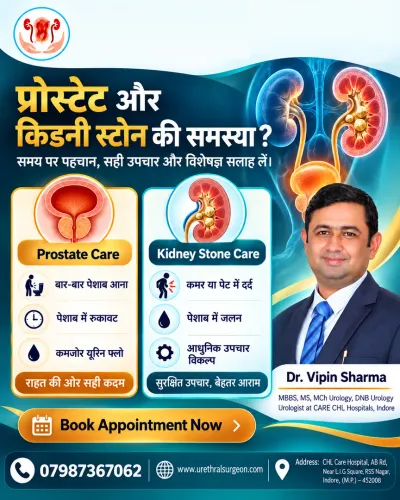
If you're looking for a kidney stone specialist doctor in Indore, you can contact Dr. Vipin Sharma for advice on kidney stones, urinary tract stones, and related urological problems. Kidney stones are hard deposits of minerals and salts that form inside the kidneys. Depending on their size, location, and composition, they may pass on their own or require medical treatment.
Kidney stones can affect people of all ages and can cause symptoms ranging from mild discomfort to sudden, severe pain. Some stones remain undetected until they are detected during imaging, while others can obstruct urine flow and require immediate medical attention.
The appropriate treatment depends on several factors, including the size and location of the stone, the severity of symptoms, the presence of infection, kidney function, and the patient's overall health. Dr. Vipin Sharma can help patients understand their symptoms, the results of the diagnosis, and available management options. A personalized treatment plan is essential because not every kidney stone requires surgery, and different approaches may be needed for different stones.
What are kidney stones?
Kidney stones, medically known as renal calculi, are solid deposits that form when certain minerals and salts in the urine thicken and form crystals.
Normals filter waste products and excess fluid from the blood to produce urine. When urine contains high levels of certain stone-forming substances, crystals can form and gradually turn into stones.
Kidney stones can vary in size, shape, and chemical composition. Some are small enough to pass through the urinary tract without any procedures, while larger stones can cause blockage, severe pain, or other complications.
Stones can form inside the kidney and later travel into the ureter, the thin tube connecting the kidney to the bladder. A stone passing through the ureter can cause severe pain, especially if it obstructs urine flow. Common types of kidney stones include calcium oxalate stones, calcium phosphate stones, uric acid stones, and struvite stones associated with certain infections. Cystine stones occur in people with less common inherited diseases.
When possible, identifying the type of stone can help guide treatment and prevention.
Common Symptoms of Kidney Stones
Kidney stone symptoms depend on the stone's size, location, and whether it obstructs the urinary tract. Some stones don't cause any significant symptoms until they're discovered during a test.
1. Sharp Side or Back Pain
One of the most common symptoms is pain in the side or back, often located below the ribs. The pain can be sharp, severe, and intermittent.
When the stone moves into the ureter, the pain may radiate to the lower abdomen or groin.
2. Painful Urination
Stones near the bladder can cause discomfort or a burning sensation when urinating. However, urinary tract infections and other illnesses can also cause burning sensations.
3. Blood in the Urine
Kidney stones can irritate the lining of the urinary tract, causing blood to appear in the urine or be detected during a urine test.
Blood in the urine does not necessarily mean kidney stones. This requires proper medical attention. 4. Frequent Urination
Some people feel the need to urinate frequently or urgently, especially when the stones are near the bladder.
5. Nausea and Vomiting
The intense pain associated with kidney stones can cause nausea or vomiting. These symptoms can also make it difficult to drink enough fluids.
6. Cloudy or Odd-Smelling Urine
Infections or other urinary problems can cause changes in the appearance or smell of urine. These symptoms require further investigation rather than being considered definitive evidence of kidney stones.
7. Difficulty Urinating
Stones can partially or completely block the flow of urine. Reduced urine output or inability to urinate requires immediate medical attention, especially if accompanied by pain or fever.
8. Fever and Chills
Fever or chills in a person suspected of having kidney stones may indicate a urinary infection, which may include an obstruction. This could be a medical emergency and requires immediate hospitalization. Important: If you suspect a kidney stone, experience a fever or chills, difficulty urinating, uncontrolled pain, persistent vomiting, or experience any symptoms during pregnancy, seek medical attention immediately. Urinary tract obstruction and infection may require immediate treatment.
Select a Specialist for Kidney Stone Diagnosis
A correct diagnosis is essential to determine the severity and choose the right treatment.
Medical History and Physical Examination
The doctor may ask about the location and severity of pain, urinary tract symptoms, fever, previous history of stones, fluid intake, medications, medical history, and family history.
Tests help diagnose a patient's condition and identify symptoms that may require immediate treatment.
Urine Test
Urine tests can help detect blood, signs of infection, and other problems. For patients who frequently develop stones, additional urine analysis may be recommended.
Blood Test
Blood tests can assess kidney function, electrolyte levels, and other factors related to the patient's condition.
Ultrasound Test
Ultrasound can identify many kidney stones and may also reveal inflammation in the urinary tract caused by an obstruction. However, it cannot detect every ureteric stone.
CT Scan
A non-contrast CT scan is typically used when detailed imaging is needed to identify a suspected urinary stone, determine its size and location, and diagnose the cause of the obstruction.
The need for CT imaging depends on the clinical situation. Radiation exposure and other imaging options should be considered, especially during pregnancy and in other situations where imaging options require special care.
Stone Analysis and Metabolic Evaluation
If a stone is passed or passed, lab analysis can help determine its composition.
Patients who frequently develop stones, have high-risk characteristics, or have specific medical conditions may benefit from additional testing, such as a 24-hour urine evaluation, to identify factors that may contribute to stone formation.
The appropriate tests depend on the patient's symptoms, medical history, and risk of recurrence.
Kidney Stones and Kidney Health: When to Seek Urgent Care
Kidney stones can sometimes lead to complications that require immediate treatment. In some cases, delaying evaluation can be dangerous.
Seek immediate medical care if you experience:
Fever or chills with suspected kidney stones.
Severe or uncontrollable pain in one side or back.
Persistent vomiting or inability to drink water.
Inability to pass urine or a significant decrease in urine output.
Severe weakness or signs of serious illness.
Symptoms of urinary stones when you have one kidney or have serious kidney disease.
Fever accompanied by urinary obstruction is especially concerning as it may indicate an infected collecting system, requiring emergency treatment.
If you are unsure about the severity of symptoms, seek medical evaluation instead of relying on home remedies.
Why consult Dr. Vipin Sharma for kidney stone problems in Indore?
Patients seeking a kidney stone specialist require an assessment that considers the cause of symptoms, the location and size of the stone, kidney function, and the risk of complications.
For advice on kidney stones and related urinary tract problems, Dr. Vipin Sharma can be contacted.
Evaluation of Individuals
Kidney stones vary in size, location, and composition. Careful evaluation helps determine whether observation, medication, and testing, or a procedure may be appropriate.
Diagnosis-Based Treatment Planning
Treatment plans should be based on symptoms, imaging, laboratory tests, medical history, and the likelihood of spontaneous stone passage.
Discussion of Available Treatment Options
Patients can discuss appropriate approaches to stone management, including conservative treatment and, where indicated, procedural options.
Focus on Preventing Recurrence of Stones
For patients with recurrent stones, identifying the causes and developing a prevention plan can be an important part of long-term care.
Follow-up and Kidney Health
Follow-up may be recommended to confirm stone passage or removal, detect any remaining stones, and monitor for recurrence or complications.
For a complete and accurate professional profile, include Dr. Vipin Sharma's verified qualifications, urology experience, hospital affiliations, available procedures, and consultation information.
Frequently Asked Questions (FAQs)
1. Who is a kidney stone specialist doctor in Indore?
Kidney stone specialists diagnose and manage stones affecting the kidneys and urinary tract. Patients in Indore can contact Dr. Vipin Sharma to confirm consultation availability and services offered for kidney stone problems.
2. What are the common symptoms of kidney stones?
Common symptoms include severe pain in the side or back, pain radiating to the groin, blood in the urine, pain when urinating, nausea, and vomiting. Some kidney stones do not cause any specific symptoms.
3. How are kidney stones diagnosed?
This may include a medical history, physical examination, urine test, blood test, ultrasound, or CT imaging. The diagnosis depends on the symptoms, potential complications, and the patient's clinical condition.
4. Can kidney stones pass naturally without surgery?
Yes, some small stones pass naturally. The likelihood of this depends on the stone's size, location, and other clinical factors. When spontaneous passage is deemed safe, doctors may recommend monitoring, medication, and follow-up.
5. When is kidney stone surgery necessary?
If the stone is unlikely to pass, causes persistent obstruction, severe symptoms, compromises kidney function, or is associated with complications, a procedure may be necessary.
6. What is the best treatment for kidney stones?
There is no single best treatment for every stone. Depending on the stone's size, location, composition, and the patient's health, options may include observation, medication, ESWL, ureteroscopy, RIRS, or PCNL.
7. What is ESWL treatment for kidney stones?
Extracorporeal shock wave lithotripsy uses focused shock waves to break up selected stones into small fragments that can be passed through the urinary tract. This depends on the stone and the patient's clinical condition.
8. What is the difference between ureteroscopy and RIRS?
Ureteroscopy is used to access and treat stones in the ureter and can also be used for selected kidney stones. RIRS uses a flexible ureteroscope to reach the stone inside the kidney through the urinary tract.
9. Can kidney stones cause blood in the urine?
Yes, stones can irritate the urinary tract and cause blood in the urine. However, there may be other causes of blood in the urine and should be medically evaluated.
10. Can kidney stones damage the kidneys?
Some stones can cause blockage, infection, or kidney failure if complications are left untreated. The risk depends on the extent and duration of the blockage and infection, and the patient's underlying kidney health.
Kidney Stone Specialist Doctor in Indore
Kidney Stone Doctor in Indore
Kidney Stone Treatment in Indore
Kidney Stone Specialist in Indore
Kidney Stone Surgeon in Indore
Kidney Calculi Treatment
Renal Stone Treatment in Indore
Ureteric Stone Treatment in Indore
Kidney Stone Removal Treatment
Kidney Stone Laser Treatment in Indore
Kidney Stone Diagnosis in Indore
Kidney Stone Pain Treatment
Recurrent Kidney Stone Treatment
Urologist for Kidney Stones in Indore
Kidney Stone Surgery Consultation
Ureteroscopy for Kidney Stones
RIRS Treatment in Indore
PCNL Surgery Consultation
ESWL Treatment for Kidney Stones
Urinary Tract Stone Specialist
Best Kidney Stone Specialist in Indore
Kidney Stone Doctor Near Me in Indore
Kidney Stone Treatment Near Me
Urologist for Kidney Stones in Indore
Kidney Stone Removal Doctor in Indore
Kidney Stone Laser Treatment Near Me
Kidney Stone Hospital in Indore
Kidney Stone Treatment in Indore Madhya Pradesh
Ureteric Stone Doctor in Indore
Dr. Vipin Sharma Kidney Stone Specialist
Keywords