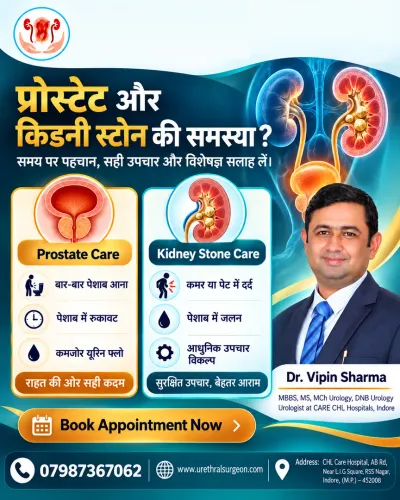
Male Infertility Doctor in Indore – Dr. Vipin Sharma, Urologist
Are you looking for a male infertility doctor in Indore? Male infertility can be a difficult and sensitive concern for individuals and couples planning to conceive. Seeking timely medical advice can help identify potential causes, understand available treatment options, and make informed decisions about reproductive health.
Dr. Vipin Sharma, a urologist in Indore, is a well-known specialist for patients seeking consultation regarding male reproductive and urinary health concerns. Men experiencing difficulty conceiving with their partners can benefit from a proper medical examination to rule out sperm health, hormonal factors, reproductive anatomy, and other potential causes.
Male infertility can be linked to low sperm count, impaired sperm movement, abnormalities in sperm shape, hormonal imbalances, varicoceles, certain infections, previous surgeries, genetic conditions, or lifestyle factors. In some cases, more than one factor may contribute to fertility problems.
A personalized evaluation is essential because treatment depends on the underlying cause, the couple's reproductive history, and other health factors. Depending on the test results, care may include lifestyle guidance, medication for specific conditions, treatment for any identified medical problems, or referral for assisted reproductive techniques.
If you're looking for a male infertility doctor in Indore, consult with Dr. Vipin Sharma to discuss your concerns and determine the best next steps. Before booking, confirm with the clinic about the doctor's current consultation services and the scope of fertility treatments.
What is male infertility?
Male infertility means a man's ability to conceive is reduced. This can be due to problems with sperm production, sperm quality, sperm transport, ejaculation, or other reproductive factors.
Infertility testing is usually done when a couple has not conceived after 12 months of regular, unprotected sex. Earlier testing may be appropriate if the female partner is 35 years of age or older, has reproductive concerns, or if one partner has a medical history that may affect fertility.
Male infertility isn't always associated with visible symptoms. Some men may have normal sexual desire and erectile function but still experience problems with sperm production or quality. A medical examination can help determine if there are any fertility problems and whether further testing or treatment is needed.
Common Causes of Male Infertility
Infertility in men can occur for a variety of reasons. It's important to understand the potential causes because different conditions require different management approaches.
1. Low Sperm Count
A low sperm count, also known as oligozoospermia, means that the semen contains fewer sperm than the laboratory reference range.
Possible causes include hormonal disorders, certain medical conditions, varicocele, genetic factors, infections, medication interactions, and exposure to excessive heat or harmful substances.
A semen analysis is usually a necessary initial test. If an abnormal result is found, retesting and further investigation may be recommended.
2. Low Sperm Motility
Sperm motility refers to the ability of sperm to move. Sperm movement is essential for reaching and fertilizing an egg.
Reduced motility can be linked to a number of reproductive, medical, or lifestyle-related factors. The significance of this result depends on the complete semen analysis and the couple's overall fertility assessment. Based on the results, the doctor may recommend further testing or discuss appropriate management.
3. Abnormal Sperm Morphology
Sperm morphology describes the size and shape of sperm. Abnormal morphology can be detected during a semen analysis.
This result should not be interpreted alone. Fertility depends on many factors, including sperm count, movement, reproductive health, and the female partner's fertility.
A qualified doctor can explain the meaning of the result in the context of a complete assessment.
4. Varicocele
A varicocele is an enlargement of the veins within the scrotum. In some men, it may be associated with decreased sperm production or reduced semen quality.
Not every varicocele causes infertility or requires treatment. Assessment may include a physical examination and, if indicated, further testing.
Treatment decisions depend on clinical findings, fertility goals, semen results, and other important factors.
5. Hormonal Imbalance
Hormones such as follicle-stimulating hormone, luteinizing hormone, and testosterone play a role in male reproductive function.
Hormonal abnormalities can affect sperm production, sexual desire, or other aspects of reproductive health. When symptoms or preliminary results indicate hormonal concerns, a blood test may be recommended.
Treatment depends on the specific diagnosis. Testosterone therapy should not be started without medical supervision because externally administered testosterone can reduce sperm production and impair fertility in men trying to conceive.
6. Blockages in the Reproductive Tract
In some men, sperm production may be normal, but a blockage prevents sperm from reaching the semen. Possible causes include previous infections, surgery, injury, or congenital diseases.
Evaluation depends on medical history, examination, and test results. Treatment may include correcting the underlying condition or, where necessary, considering a specialist fertility procedure.
7. Ejaculation Problems
Some conditions can interfere with semen delivery during intercourse. These may include retrograde ejaculation, ejaculatory dysfunction, or problems related to previous surgery, medication, or neurological conditions.
Assessment helps identify the underlying cause and determine whether treatment or assisted reproductive options may be appropriate.
8. Infections and Inflammations
Some infections or inflammatory conditions involving the reproductive tract can affect fertility. Symptoms may include pain, swelling, discharge, or discomfort, although some conditions may have few symptoms.
A medical assessment and proper testing can help determine whether an infection is present. Antibiotics should only be used when clinically indicated and prescribed by a qualified healthcare professional.
9. Genetic and Medical Conditions
Some genetic conditions and long-term illnesses can affect sperm production or reproductive function. Previous cancer treatment, testicular injury, undescended testicles, and some systemic medical conditions may also contribute.
A detailed medical history helps the doctor determine whether specialized testing or referral is needed.
10. Lifestyle and Environmental Factors
Smoking, excessive alcohol consumption, anabolic steroid use, certain recreational drugs, obesity, poor sleep, and exposure to certain environmental hazards can affect reproductive health.
Lifestyle factors do not account for every case of male infertility, and healthy habits cannot guarantee conception. However, addressing modifiable risk factors can support general health and improve some factors related to fertility.
Why Choose Dr. Vipin Sharma for Male Infertility Consultations in Indore?
Patients seeking a male infertility doctor in Indore often require clear information, a respectful consultation, and a structured approach to identifying potential causes.
Dr. Vipin Sharma is presented here as a urologist for patients seeking evaluation of male reproductive and urinary health issues. Before publishing, please confirm his current qualifications, professional registration, consultation location, and specific experience in male infertility management.
During the consultation, patients can discuss:
* Their fertility history and current concerns.
* Whether a semen analysis or other tests are necessary.
* Possible medical or structural causes.
* The role of lifestyle changes and recommended treatments.
* Should a fertility specialist or another specialist be involved?
* Expected timeline for follow-up and re-evaluation.
* Potential benefits, limitations, and costs of treatment.
A trusted healthcare provider should explain the diagnosis and available options without promising guaranteed results. Fertility outcomes depend on many factors, including the underlying cause and the reproductive health of both partners.
Frequently Asked Questions (FAQs)
1. Who is a male infertility doctor?
A male infertility doctor diagnoses reproductive problems such as low sperm count, abnormal sperm movement, hormonal problems, varicoceles, and some ejaculation problems. Depending on the problem, care may include a urologist, andrologist, or fertility specialist.
2. When should I consult a male infertility doctor in Indore?
Couples are generally advised to undergo fertility testing after 12 months of regular, unprotected sex without pregnancy. Earlier testing may be appropriate if the female partner is 35 years of age or older, has known reproductive problems, or has a medical history of one partner.
3. Can a urologist treat male infertility?
Urologists can diagnose a number of conditions that affect male reproductive health. Depending on their training and clinical scope, they may manage some causes of infertility or refer patients to an andrologist or fertility specialist if necessary.
4. What are the common causes of male infertility?
Possible causes include low sperm count, reduced sperm motility, varicocele, hormonal disorders, obstruction of the reproductive tract, infections, genetic conditions, and certain medications or lifestyle factors. Sometimes, a definitive cause cannot be determined.
5. What tests are performed to diagnose male infertility?
The diagnosis often begins with a medical history, physical examination, and semen analysis. Based on the initial results, hormonal blood tests, ultrasound, genetic testing, or other tests may be recommended.
6. Is low sperm count treatable?
Treatment depends on the underlying cause. Some conditions can be treated with medical treatment or surgery, while others may require assisted reproductive techniques. A specialist can advise on options after reviewing test results.
7. Can lifestyle changes improve male fertility?
Healthy habits like avoiding smoking, avoiding anabolic steroids, drinking less alcohol, maintaining a healthy weight, and getting enough sleep can all contribute to reproductive health. However, lifestyle changes alone cannot address every cause of infertility.
8. Does testosterone therapy improve male fertility?
Extraneous testosterone can suppress hormonal signals necessary for sperm production and significantly reduce sperm counts. Men trying to conceive should not use testosterone therapy without consulting a specialist.
9. Can men experience infertility even if their sexual function is normal?
Yes. A man may have normal sexual desire and erections, but still have a low sperm count or other abnormalities in his semen. A fertility evaluation is needed to assess sperm health.
10. Is varicocele linked to male infertility?
In some men, varicoceles can cause decreased sperm production. Not every varicocele affects fertility or requires treatment. A specialist can determine whether intervention may be appropriate.
Male Infertility Doctor in Indore
Male Infertility Specialist in Indore
Male Fertility Doctor in Indore
Urologist for Male Infertility in Indore
Dr. Vipin Sharma Urologist
Best Urologist in Indore
Male Infertility Treatment in Indore
Low Sperm Count Treatment in Indore
Sperm Analysis in Indore
Male Reproductive Health Specialist
Varicocele Treatment in Indore
Male Fertility Evaluation in Indore
Male Hormonal Disorder Consultation
Male Infertility Diagnosis
Urology Consultation in Indore
Fertility Doctor for Men in Indore
Where to consult a male infertility doctor in Indore
Urologist consultation for male infertility in Indore
Treatment options for low sperm count in Indore
Doctor for male reproductive health problems in Indore
Male infertility tests and evaluation in Indore
Varicocele and male fertility consultation
Male infertility consultation for couples trying to conceive
Dr. Vipin Sharma male fertility consultation
Keywords